
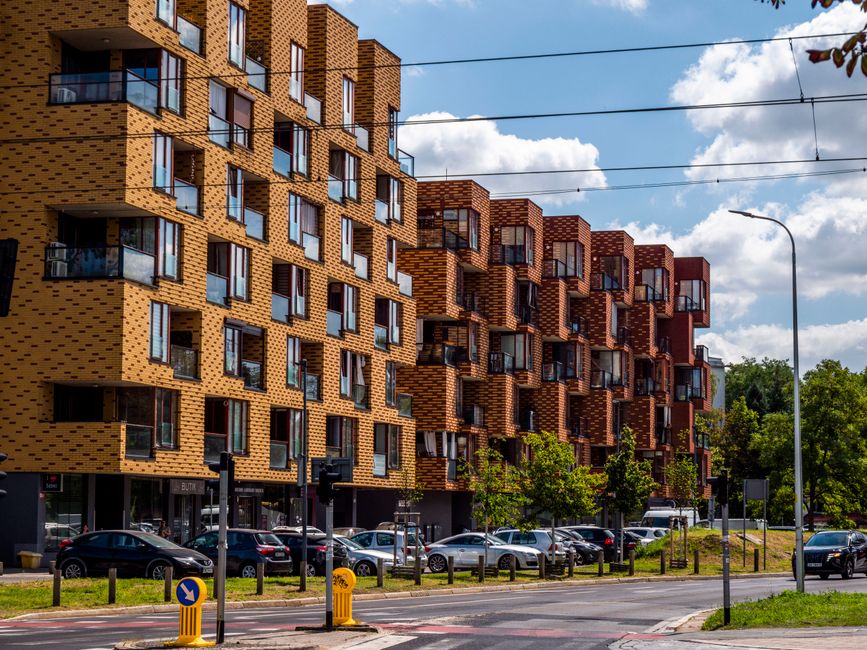
How a Smarter Housing Market is Fueling Progress in Columbus, IN
Columbus, Indiana, is renowned for its architectural innovation and forward-thinking community spirit. That same spirit is now reshaping its housing market, creating a more resilient and prosperous future for everyone. At Neighborhood Progress, Inc. (NPI), we are a non-profit community development corporation dedicated to fostering this progress. We work at the intersection of development, finance, and community engagement to ensure that as Columbus grows, it grows smarter and more equitably. This post explores how a smarter housing market isn’t just about building houses—it’s about building a stronger community and fueling sustainable progress throughout Columbus, IN.
Key Takeaways
- A “smarter” housing market in Columbus utilizes data, strategic partnerships, and a focus on community needs to create diverse and attainable housing.
- By providing a variety of housing options, Columbus can more effectively attract and retain the skilled workforce essential for its major employers and economic growth.
- Organizations like Neighborhood Progress, Inc. play a vital role by connecting developers, city officials, and residents to ensure housing projects benefit the entire community.
- Innovative strategies like infill development and rehabilitating existing homes are key to stabilizing neighborhoods, increasing property values, and preserving community character.
TL;DR
A smarter housing market in Columbus, IN, is fueling progress by using data-driven, collaborative strategies to create diverse housing options that attract talent, stabilize neighborhoods, and support long-term economic growth, with organizations like Neighborhood Progress, Inc. leading the charge.
What defines a “smarter” housing market in Columbus?
A smarter housing market in Columbus is defined by its proactive use of data, strategic partnerships, and community-focused initiatives to create stable, diverse, and accessible housing. This approach moves beyond simply reacting to supply and demand, focusing instead on long-term strategies for community well-being and economic resilience. It’s about building a housing ecosystem that serves residents at all stages of life and income levels, ensuring the city’s foundation remains strong for generations to come.
Data-Driven Decision Making
A smarter market doesn’t guess; it measures. By leveraging comprehensive housing studies and demographic data, community leaders can pinpoint specific gaps and opportunities. For instance, the 2021 City of Columbus and Bartholomew County Housing Study identified a significant need for more diverse housing types beyond traditional single-family homes. This includes the “missing middle”—duplexes, townhomes, and small apartment buildings—that cater to young professionals, essential workers, and downsizing residents.
Analyzing market trends allows for more than just reaction; it enables forecasting. Understanding population growth, employment trends, and housing costs helps prevent critical shortages before they occur. This shift from print ads to predictive analytics in understanding market dynamics is fundamental to building a responsive and stable housing environment.
Public-Private Partnerships
No single entity can solve complex housing challenges alone. A cornerstone of Columbus’s smarter market is the robust collaboration between the city government, non-profits like Neighborhood Progress, Inc., and private developers. These partnerships create a powerful synergy, allowing for the sharing of risk, resources, and expertise.
The city can deploy municipal tools like zoning updates, tax incentives, and infrastructure improvements to encourage the right kind of development in the right places. Private developers bring market efficiency and construction expertise. Non-profits like ours often act as the crucial bridge, ensuring projects align with community goals, meet affordability targets, and navigate complex funding landscapes that might otherwise make a valuable project unfeasible.
Focus on Housing Diversity
A one-size-fits-all approach to housing no longer works for a dynamic community like Columbus. A smarter market champions housing diversity to meet the varied needs of its residents.
- Missing Middle Housing: This includes a range of multi-unit or clustered housing types compatible in scale with single-family homes, such as duplexes, fourplexes, and courtyard apartments.
- Adaptive Reuse: Columbus’s rich architectural history presents opportunities to convert underutilized commercial or industrial buildings into unique residential spaces, preserving character while adding housing stock.
- Varied Ownership Models: Supporting a mix of rental apartments, owner-occupied townhomes, and single-family residences ensures that people at different income levels and life stages can find a home here.
This focus ensures that from the new graduate starting at a major local employer to the retiree looking to stay in their community, there is a housing option that fits.
How does a smarter housing market attract and retain talent?
A smarter housing market directly attracts and retains talent by providing diverse, high-quality, and attainable housing options that appeal to a modern workforce. When employees of cornerstone companies like Cummins, Columbus Regional Health, and the Bartholomew Consolidated School Corporation can find a place to live that fits their lifestyle and budget, housing becomes one of the city’s most powerful economic development tools. Without it, even the best job offers can fall flat.
Meeting the Needs of a Modern Workforce
Today’s skilled professionals and young families look for more than just a job; they look for a community. A smarter housing strategy helps build that community by fostering the development of walkable, vibrant neighborhoods with desirable amenities. Offering a mix of rental and ownership opportunities close to major employment centers reduces commute times, improves work-life balance, and encourages employees to spend their time and money within the local economy. When a potential new hire sees attainable, attractive housing options, it signals that Columbus is a place where they can not only work but truly live and thrive.
Supporting Essential Community Workers
A community’s strength is measured by its ability to support everyone, including the essential workers who form its backbone. Teachers, healthcare professionals, first responders, and service industry staff must be able to afford to live in the community they serve. When these workers are priced out and forced into long commutes, it strains public services and weakens the social fabric. By intentionally creating and preserving housing that is affordable for these moderate-income households, a smarter housing market ensures that the people who educate our children, care for our sick, and keep our community safe can also be our neighbors.
What role do organizations like Neighborhood Progress play in this system?
Organizations like Neighborhood Progress, Inc. act as essential catalysts and navigators, bridging the gaps between developers, city government, and residents to ensure housing development serves the entire community. As a non-profit Community Development Corporation (CDC), our expertise lies in tackling the complex financial, logistical, and social challenges inherent in community-focused housing projects, making us a key driver in Columbus’s smarter housing market.
Facilitating Complex Projects
Many vital housing projects, especially those involving infill or affordable components, face financial hurdles that traditional development models cannot overcome. This is where we step in.
- Land Assembly: We can acquire and hold vacant or underutilized parcels (a process known as land banking) to assemble a site large enough for a viable development project.
- Gap Financing: We specialize in layering multiple funding sources, including grants, low-interest loans, and tax credits, to provide the “gap financing” needed to make a project financially feasible for a private developer while still meeting community affordability goals.
Championing Community Interests
Our mission is rooted in the well-being of the community. We act as a trusted intermediary, ensuring that resident voices are heard and that new developments reflect the neighborhood’s character and meet its most pressing needs. We engage in community outreach to build consensus and advocate at the policy level for zoning changes, incentives, and programs that promote long-term housing affordability and neighborhood stability. Our work is documented across our organization, and you can explore the full breadth of our published initiatives to learn more about our specific projects and advocacy.
Executing Key Initiatives
Beyond facilitation, Neighborhood Progress, Inc. directly undertakes projects that are critical to neighborhood health. This includes managing the rehabilitation of existing homes to bring them up to modern standards and constructing new, high-quality infill homes on vacant lots. We also administer programs designed to assist first-time homebuyers or provide resources for current homeowners to make critical property improvements, further stabilizing the neighborhoods we serve. The full scope of our work is detailed across our project pages and organized by topical categories for easy reference.
How are innovative housing solutions improving neighborhood stability?
Innovative housing solutions like infill development and strategic rehabilitation improve neighborhood stability by reinvesting in the city’s core, increasing property values, and fostering a stronger sense of community. Instead of promoting outward sprawl, which strains municipal resources and hollows out established areas, these strategies strengthen Columbus from within, making our neighborhoods more resilient, attractive, and vibrant.
The Power of Infill Development
Infill development is the practice of building new homes on vacant or underused lots within existing neighborhoods. This targeted approach has a powerful ripple effect.
| Benefit of Infill Development | Impact on Neighborhood Stability |
|---|---|
| Eliminates Blight | Transforming a vacant, overgrown lot into a new, well-maintained home immediately improves the block’s aesthetic and signals positive investment. |
| Increases Property Values | New, high-quality construction has been shown to lift the property values of surrounding homes. |
| Enhances Density | Gently increasing neighborhood density supports local businesses, makes public transit more viable, and utilizes existing infrastructure more efficiently. |
| Fosters Community | Adding new neighbors to an established area strengthens social connections and brings new energy to the community. |
The Value of Rehabilitation
Preserving and modernizing Columbus’s existing housing stock is just as important as building new. Rehabilitating older homes offers a unique set of benefits. It honors the architectural character that gives our historic neighborhoods their distinct charm while updating the homes to meet the needs of modern families. This often involves improving energy efficiency, reconfiguring floor plans for better function, and addressing deferred maintenance. Rehabilitation is frequently more cost-effective and environmentally sustainable than demolition and new construction, making it a smart and responsible way to enhance neighborhood quality and stability.
What challenges still exist for the Columbus housing market?
Despite significant progress, the Columbus housing market still faces persistent challenges, including rising construction costs, limited land availability, and the critical need to ensure long-term affordability. Acknowledging these hurdles is a fundamental part of a “smarter” strategy, as it allows community leaders and organizations like Neighborhood Progress, Inc. to develop proactive and targeted solutions to address them head-on.
- Rising Material and Labor Costs: The cost of building a home has increased dramatically nationwide. According to the National Association of Home Builders, building material prices have climbed significantly in recent years, a trend that directly impacts the final price of a new home. This makes it increasingly difficult to construct housing that is affordable for middle-income families without subsidies or innovative financing.
- Limited Land for Development: In a well-established city, finding suitable and affordable land for new projects is a constant challenge. This is especially true for infill development, where available lots may be scattered, oddly shaped, or require significant site preparation, adding to the overall project cost.
- Maintaining Long-Term Affordability: As strategic investments in housing and infrastructure lead to neighborhood improvement, a new challenge emerges: ensuring that rising property values and taxes do not displace long-time residents. A truly smart housing market must include strategies like community land trusts, property tax relief programs, and deed restrictions to preserve affordability and allow existing residents to benefit from the community’s progress.
Final Thoughts
The progress being made in the Columbus, IN housing market is a testament to what can be achieved through collaboration, data-driven innovation, and a shared commitment to community. A smarter housing market is not a final destination but a continuous process—one that requires constant adaptation, creative problem-solving, and unwavering effort from all stakeholders. By focusing on strategic partnerships, championing diverse housing solutions, and directly addressing challenges, Columbus is building more than just houses; it’s building a durable foundation for a more prosperous, equitable, and resilient future. At Neighborhood Progress, Inc., we leverage our expertise in development and finance to proudly contribute to this vital work, and we are optimistic and excited for what the future holds for our community.